
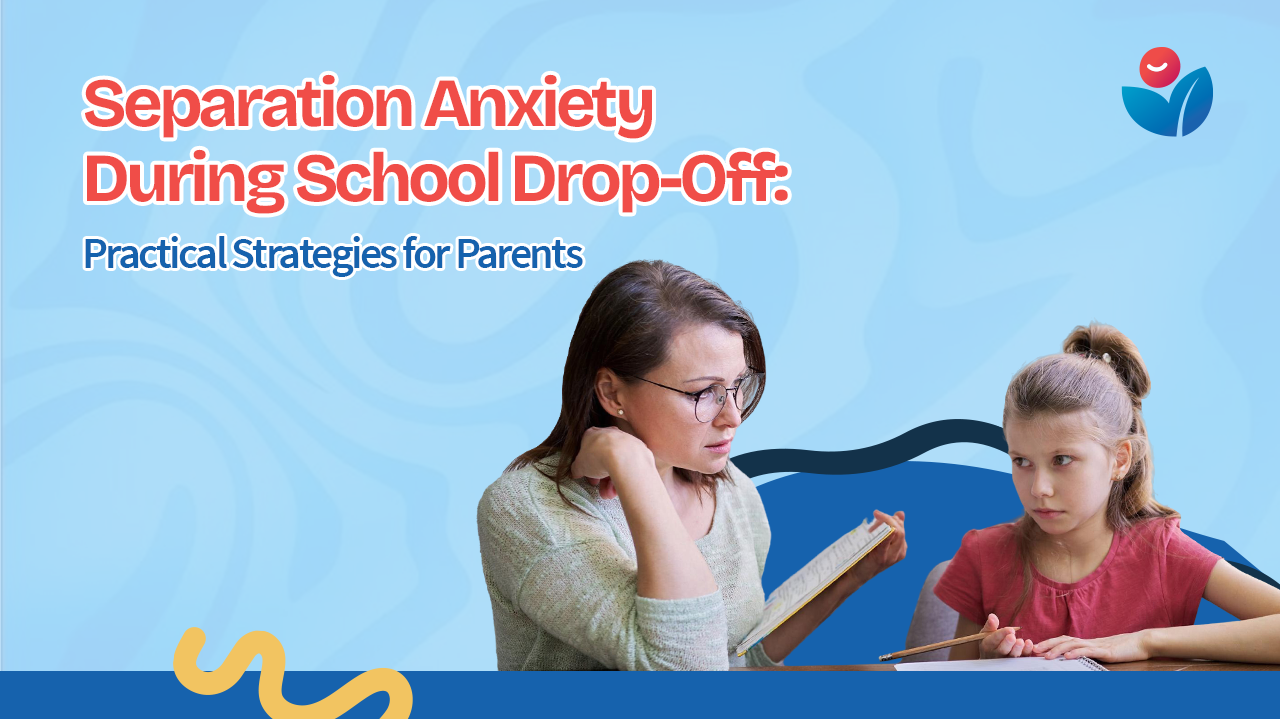
School drop-off can look very different from what parents expect.
Some children walk in without looking back. Others cling, cry, or freeze at the door. For many families, mornings become tense, not because school is a problem, but because separation is.
Separation anxiety during school drop-off is common in the early years, especially during transitions such as starting school, moving classes, or returning after holidays. The key question for parents is often not ‘why’ it’s happening, but how long it should last, and what actually helps.
Young children rely heavily on familiar adults to regulate their emotions. When that familiar presence disappears, even briefly, their nervous system has to work harder to cope.
At drop-off, several things happen at once:
- Separation from a caregiver
- A busy, noisy environment
- Expectations to settle quickly
- Emotional build-up from earlier in the morning
For some children, this combination is overwhelming, even if they enjoy school once they settle.
The goal isn’t to eliminate emotions, it’s to help children move through them.
Helpful strategies often include:
- Predictability: A consistent drop-off routine helps children know what to expect.
- Brief, calm goodbyes: Lingering can increase distress rather than ease it.
- Naming feelings without amplifying them: A simple “I know it feels hard to say goodbye” is often enough.
- Confidence in the separation: Children take cues from adult behaviour. Calm reassurance matters.
Strong emotions don’t mean a child isn’t coping, they mean they’re learning to cope.
Transitions work best when they are gradual and supported.
Some families find it helpful to:
- Practice short separations outside of school
- Talk through the drop-off routine ahead of time
- Use a consistent goodbye phrase or gesture
- Coordinate with teachers on handover strategies
Often, children settle within minutes of the caregiver leaving, even if the moment of separation feels intense.
It’s reasonable to feel concerned if separation distress:
- Persists beyond the initial settling-in period
- Worsens rather than improves over time
- Interferes with learning or daily functioning
- Extends beyond drop-off into the rest of the school day
In these cases, it can help to step back and look at the broader picture – including sleep, routine, emotional regulation, and environmental demands.
If separation anxiety feels ongoing or overwhelming, the first step should always be a discussion with your GP.
Your GP can:
- Review your child’s developmental and emotional history
- Consider contributing factors such as sleep, routines, or stress
- Guide whether further support or referral is appropriate
If needed, your GP may refer you to one of our specialists at Smart Paeds. Emotional and behavioural challenges are complex and should always be assessed carefully by a qualified clinician.
Drop-off struggles don’t define how the rest of the day (or the school year) will unfold. They’re one part of a larger adjustment, and one that many children move through with time and support.
The question to hold onto isn’t “why is this still happening?” – but “what does my child need to feel safe as they learn to separate?”
