

Lately, it feels like every second conversation among parents touches on ADHD. A child in your son’s class just got diagnosed. Your daughter’s teacher has suggested an assessment. Or maybe you have been quietly wondering about your own child for a while now, noticing the restlessness, the forgotten homework, the difficulty sitting through dinner without bouncing off the walls.
If you have found yourself asking “is this just kids being kids, or is something else going on?”, you’re not alone. And the question is worth taking seriously.
So why are ADHD diagnosis rates rising?
There is no single reason, but a few things are contributing to the increase in ADHD diagnosis in children today.
🧩 We understand ADHD much better than we used to.
For a long time, ADHD was thought of as a condition that mainly affected hyperactive boys. We now know that ADHD in children presents in many different ways, including the quieter, more inattentive type that is easily missed, particularly in girls. As awareness has grown, more children who would have previously gone unnoticed are now being identified and supported.
🏫 Schools have also become more attuned to the signs.
Teachers are often the first to flag concerns, and with greater awareness of ADHD in children’s symptoms, those conversations with parents are happening earlier than they once did.
There is also the reality that the demands placed on children today are different.
📱Longer school days, more structured environments, screens at home, and less unstructured outdoor time all interact with a child’s developing brain in ways that can make attention difficulties more visible.
Importantly, rising ADHD diagnosis rates do not mean ADHD is being over-diagnosed. For many children, getting a diagnosis brings enormous relief, both for them and for their families. It explains a great deal, and it opens the door to real support.
What are the symptoms of ADHD in children?
ADHD is a neurological disorder that affects how the brain manages attention, impulse control, and activity levels.
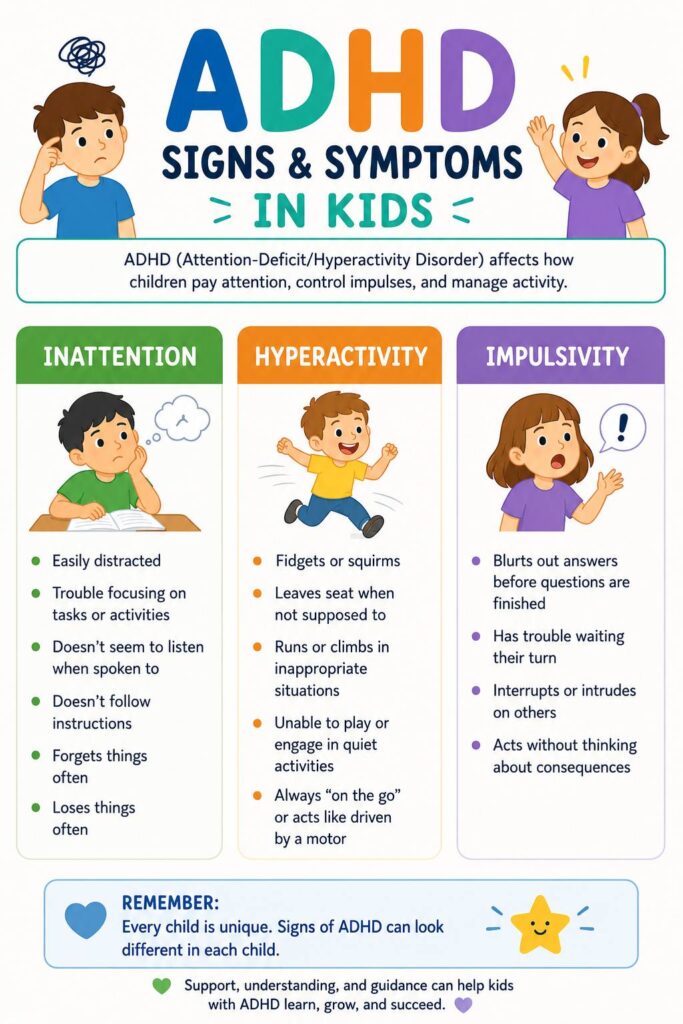
The symptoms of ADHD in children generally fall into three patterns: predominantly inattentive, predominantly hyperactive-impulsive, or a combination of both.
Inattentive symptoms might look like
- difficulty staying focused on tasks,
- losing things constantly,
- forgetting instructions, or seeming to daydream.
Hyperactive and impulsive symptoms might look like
- fidgeting,
- interrupting,
- difficulty waiting, or always being “on the go.”
Many children show a mix of both.
It is worth noting that no single behaviour on its own points to ADHD. The concern arises when these patterns are persistent, appear in more than one setting (at home and at school, for example), and are getting in the way of a child’s daily life and learning.
What is the process for an ADHD diagnosis in Australia?
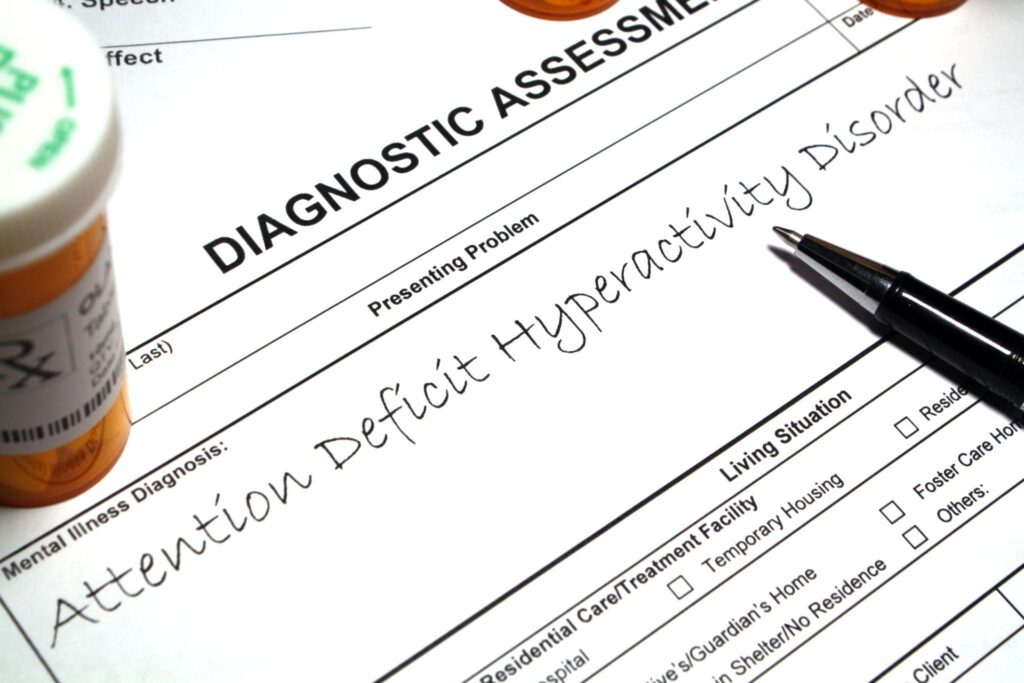
Many parents wonder what a child ADHD assessment actually involves. In Australia, a formal ADHD diagnosis is made by a paediatric ADHD specialist or developmental paediatrician. The process typically includes a detailed developmental history, input from parents and teachers through standardised questionnaires, and a clinical assessment of the child.
It is thorough for good reason. ADHD shares features with other conditions, including
- anxiety,
- learning difficulties, and
- sleep problems,
so a careful evaluation helps ensure the right picture is being formed.
At an ADHD assessment clinic, the goal is not just to confirm or rule out a diagnosis, but to understand the whole child.
Can ADHD symptoms change as a child grows older?
Yes, and this is something many parents are not told upfront. ADHD does not look the same across all ages. Hyperactivity, for example, often becomes less visible in adolescence, but inattention and difficulty with organisation can become more pronounced as school demands increase. Some young people develop strong coping strategies over time, while others may need adjusted support as they move through different stages.
This is why ongoing review with a developmental paediatrician matters, not just a one-time assessment.
The importance of ADHD diagnosis and treatment goes beyond a label.
- Understanding what is happening for a child changes how parents respond,
- how teachers teach, and
- how the child sees themselves.
ADHD services that take a whole-family, collaborative approach make a genuine difference.
If you are in Perth’s southern suburbs and wondering whether your child might benefit from a child ADHD assessment, early evaluation is always worthwhile.
Smart Paeds supports families across Perth with guidance, assessments, and ongoing care, working closely with parents, schools, and healthcare providers.
