
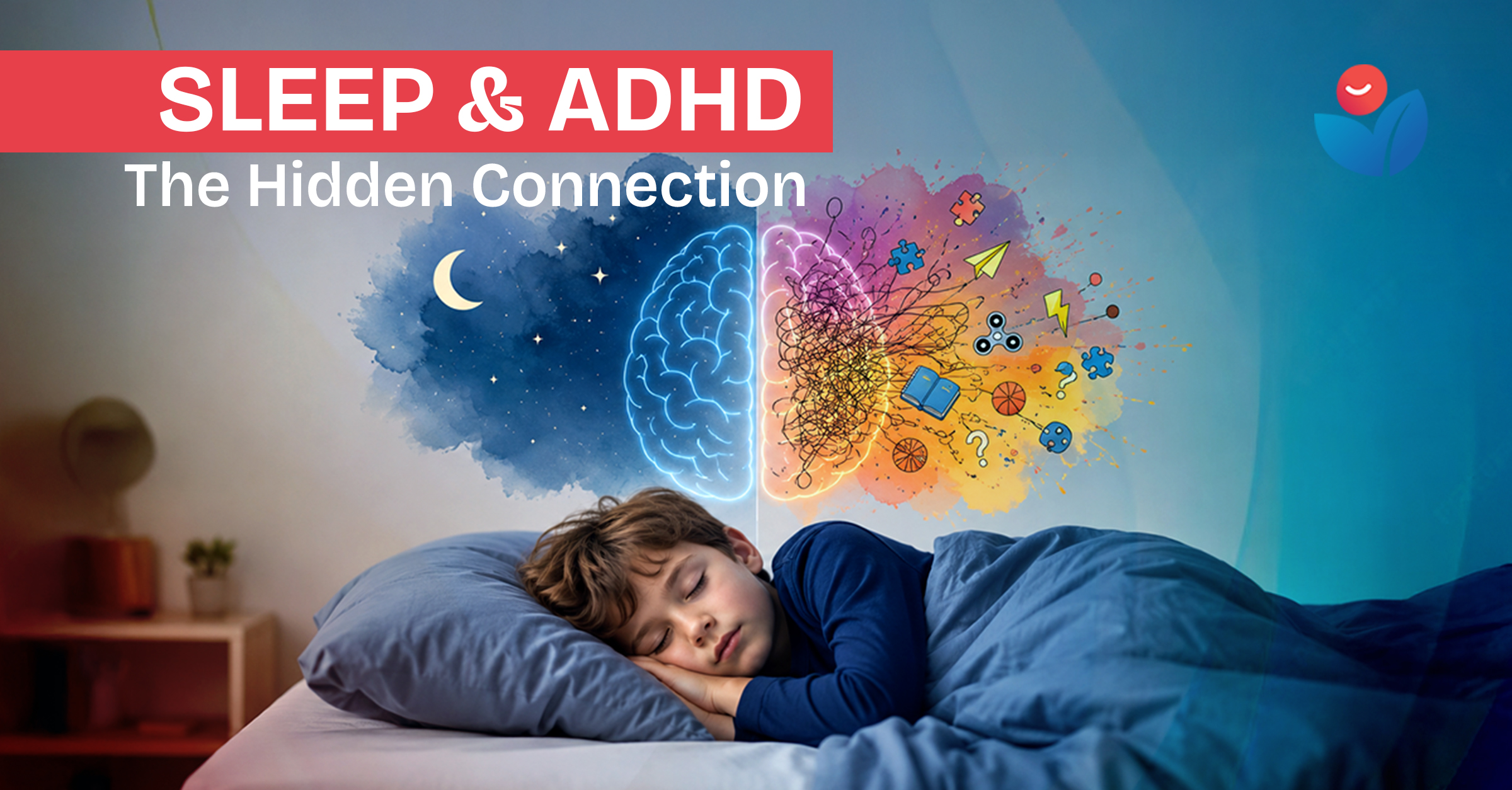
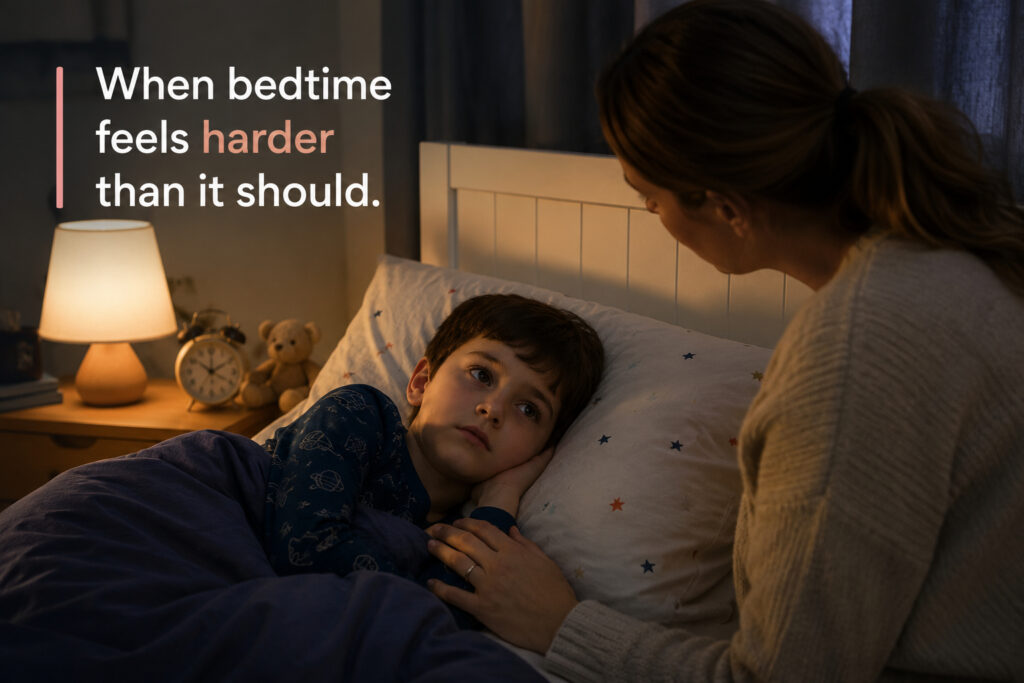
It is 10pm and your child is still wide awake. They have been in bed for an hour, but sleep is nowhere near happening. You know tomorrow is going to be a hard day, and you are already bracing for it.
For many families managing ADHD, this is not an occasional bad night. It is the routine. Sleep and ADHD
in children are far more connected than most parents realise, and the relationship between the two can
make an already challenging situation significantly harder to manage.
Why do kids with ADHD Struggle to Sleep?
ADHD sleep problems are extremely common, but they are not always well understood. Children with ADHD often have difficulty winding down at the end of the day. Their minds stay active, their bodies stay restless, and the transition from daytime energy to sleep-ready calm is genuinely harder for them than it is for other children.
There are also neurological factors at play. Research suggests that children with ADHD may have differences in melatonin production, the hormone that signals to the body that it is time to sleep. This means that ADHD and insomnia in children often go hand in hand, not because of poor habits alone, but because of how the brain is wired.
Some children also experience restless legs, night waking, or difficulty staying asleep. It is also worth being alert to snoring or pauses in breathing during sleep, which can point to obstructive sleep apnoea, a condition that is much more common in children with ADHD, affecting up to 30% of them. In some cases, a sleep study may be recommended to confirm this.
“Sleep difficulties are extremely common in children with ADHD, affecting up to 70% of them. Because disrupted sleep and ADHD can present so similarly, families are frequently unsure which is actually driving their child’s challenges. The approach we take is to address sleep quality first, then reassess the ADHD symptoms. If those symptoms settle once your child is sleeping well, sleep was likely the primary issue. If the symptoms persist despite improved sleep, that points to true ADHD.”
~ Smart Paeds Clinical Team
How Poor Sleep Affects ADHD Symptoms ?
This is where the cycle becomes particularly difficult. Poor sleep and ADHD symptoms have a two-way
relationship. ADHD makes it harder to sleep, and lack of sleep makes ADHD symptoms worse.
A child who has not slept well will typically show increased impulsivity, lower frustration tolerance, difficulty concentrating, and more intense emotional reactions the following day. In a child already managing ADHD, these effects can be pronounced enough to look like a significant worsening of symptoms, when what has actually happened is simply a bad night of sleep.
“Sleep disorders can leave a child fatigued and inattentive during the day, and this is often mistaken for ADHD. Good sleep is foundational to managing ADHD well, but we know that for most parents, routines can feel quite challenging. We do recommend utilising an occupational therapist. OTs are well-placed to work on practical sleep routines, setting up calming wind down rituals, managing sensory needs around bedtime, and building consistent daily structure that supports better sleep.”
~ Smart Paeds Clinical Team
What ADHD bedtime issues can look like ?
ADHD bedtime issues vary between children, but some patterns come up regularly. These may include:
- Difficulty settling, even when physically tired
- Racing thoughts or an inability to switch off
- Resistance to bedtime routines, sometimes significantly so
- Frequent waking during the night
- Restless or jerky leg movements during sleep
- Snoring or pauses in breathing
- Waking very early and being unable to get back to sleep
- Extreme difficulty waking in the morning, despite an early bedtime
These patterns are worth mentioning to a professional, particularly if they are consistent and affecting
your child’s daytime functioning. Child sleep disorders and ADHD frequently overlap, and a specialist
can help identify what is driving the difficulties. Where sleep difficulties are suspected, a clinician may
ask parents to keep a sleep diary and complete sleep questionnaires to get a clearer picture of what is
happening overnight.
What can parents do to help?
There is no universal fix, and what works will depend on the child. That said, some approaches tend to be helpful for sleep difficulties in neurodivergent kids more broadly:
- A consistent, predictable bedtime routine that starts well before the intended sleep time
- Reducing screens for at least an hour before bed, as blue light can further suppress melatonin
- A calm, low-stimulation wind-down environment
- Physical activity earlier in the day to help with natural tiredness by evening
- Keeping wake times consistent on weekends where possible
- Where a child is struggling to settle or stay asleep, behavioural therapy can help build healthier
sleep patterns over time
“If we suspect a sleep disorder, we’ll often ask parents to keep a sleep diary and complete some short sleep questionnaires. These give us a clear picture of what’s really happening overnight. We’ll ask about restless or jerky leg movements during sleep, and about snoring or pauses in breathing, which can suggest obstructive sleep apnoea. This matters because sleep apnoea is much more common in children with ADHD, affecting up to 30% of all kids.”
~ Smart Paeds Clinical Team

If your child’s sleep difficulties are consistent, affecting their behaviour and mood during the day, or
making it harder to manage their ADHD, it is worth raising with a professional. Sleep is not a secondary
concern when it comes to ADHD management. It is central to it.
Your GP is a good starting point. They can assess the situation and, where appropriate, refer your child to a developmental paediatrician in Perth for a more thorough evaluation. If your child has not yet had a formal ADHD assessment and you have concerns, an ADHD assessment clinic can look at both the ADHD and the sleep picture together, which gives a much more complete understanding of what is going on.
If sleep and behaviour concerns are affecting your family, start with a conversation with your GP. They
can provide guidance and, where needed, a referral to a paediatrician or psychologist at Smart Paeds
for further support, not only for your child’s wellbeing but for yours, too.
Smart Paeds supports families across Perth with guidance, assessments, and ongoing care, working
closely with parents, schools, and healthcare providers.
