
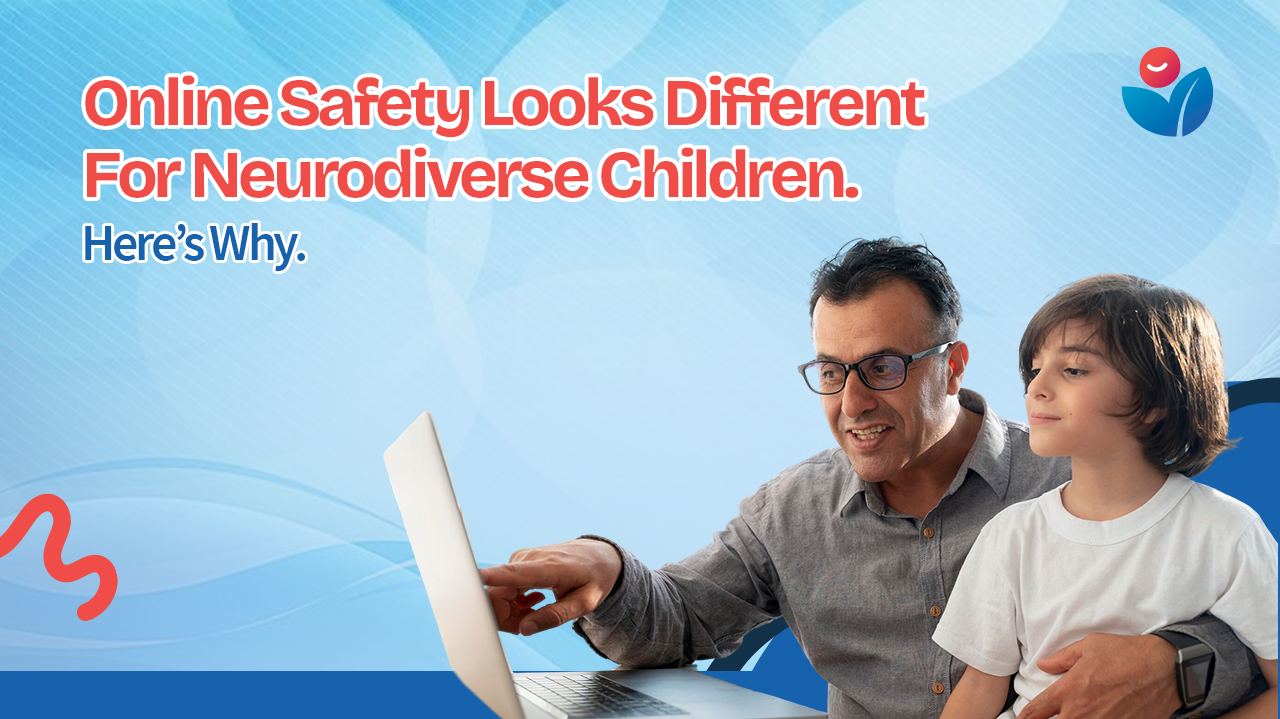
If you’ve ever watched your child click through videos, games and chats at lightning speed and thought, “that escalated quickly” - this is for you.
For many families, online safety advice sounds simple enough: don’t click strange links, don’t talk to strangers, don’t share personal information. But for some children, especially those who experience differences in attention, impulse control, emotional regulation or social understanding, the online world works very differently.
And that means online safety has to look different too.
Before we go further, one important note: every child is unique. If you have concerns about your child’s development, behaviour or online experiences, the right first step is always to speak with your GP. Your GP can help guide next steps and, where appropriate, provide a referral to one of the specialist paediatricians at Smart Paeds for further support.
Quick clicks and quick sharing
Some children find it genuinely hard to pause before acting. This can show up online as:
- clicking pop-ups or links without thinking
- joining new chats or games instantly
- sharing photos, school names or locations too easily
According to the Australian eSafety Commissioner, impulsive online behaviour and rapid sharing are common risk factors for children who have difficulties with self-regulation and attention.
This isn’t about being careless. It’s about how a child’s brain processes information and decisions in the moment.
A more helpful approach is:
- setting very clear rules about what never gets shared
- using parental controls and device restrictions as support tools (not punishment)
- practising “pause first” habits together
Not always recognising unsafe behaviour
A lot of online safety advice assumes children can easily read intention and tone. In real life, facial expressions and body language help. Online, those clues disappear.
For some children, especially those who find social communication more challenging, it can be difficult to recognise when a conversation starts to feel unsafe or inappropriate.
Research in child online risk highlights that children who struggle with social interpretation are more vulnerable to online manipulation and confusing social interactions (Livingstone & Stoilova, London School of Economics, Children’s Online Risks).
What helps most is not constant monitoring, but:
- encouraging children to show you messages that feel “odd”
- reminding them that it’s always okay to ask an adult about an online interaction
- keeping conversations open and judgement-free
Online friendships don’t follow the same rules
Many neurodiverse children feel more comfortable online than in busy, face-to-face social environments. Games and digital platforms can feel predictable and safe.
But the boundaries can blur.
Children may:
- feel intense attachment to online friends
- expect immediate replies
- share very personal details early in a friendship
The eSafety Commissioner also notes that online relationships can develop much faster than offline ones, which can make it harder for children to recognise healthy boundaries.
Simple, regular conversations about:
- what private information means
- how friendships grow over time
- and when to step back from a chat can make a real difference.
When content becomes emotionally overwhelming
Fast-moving videos, loud sounds, distressing news, arguments in comment sections, all of this can be a lot.
Some children are more sensitive to emotional and sensory input. After screen time, you may notice:
- irritability
- anxiety
- difficulty calming down
- trouble sleeping
This isn’t just about “too much screen time”. It’s often about the type of content and how intense it feels.
Watching new channels together, switching off autoplay and building a short wind-down routine after devices are put away can help reduce that overload.
When should you seek professional support?
If online experiences are regularly affecting your child’s mood, behaviour, learning or sleep, start with a conversation with your GP. Your GP can assess concerns and, if needed, refer your child to a specialist paediatrician at Smart Paeds for further evaluation and guidance.
References (for parents who’d like to read more):
- Australian eSafety Commissioner – Online safety for children https://www.esafety.gov.au/parents
- Livingstone, S. & Stoilova, M. – Children’s online risks and vulnerabilities (LSE) https://www.lse.ac.uk/media-and-communications/research/children-and-the-internet
