
This blog is intended for general informational purposes only and does not constitute medical advice. Every child is different and individual circumstances vary. Please consult a qualified medical practitioner about your child’s specific needs before making any healthcare decisions.
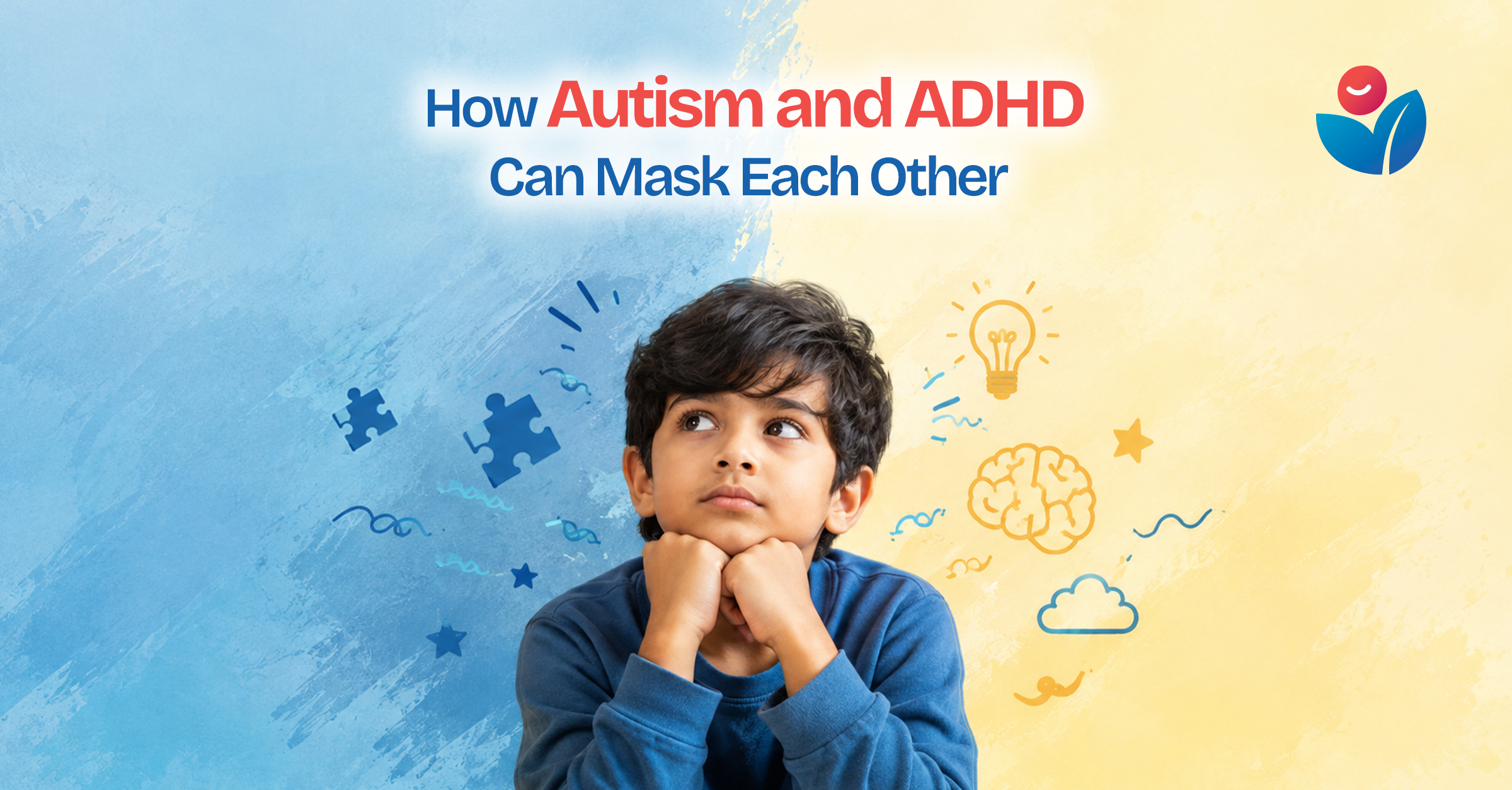
Here is something that surprises a lot of parents – and even some clinicians: autism and ADHD are not mutually exclusive. They co-occur in roughly 50 to 70 percent of cases, depending on the study. And when they are both present, each one can make the other harder to see.
This matters especially if your child already has one diagnosis and something still feels like it is not fully explained.
Why they are easy to confuse
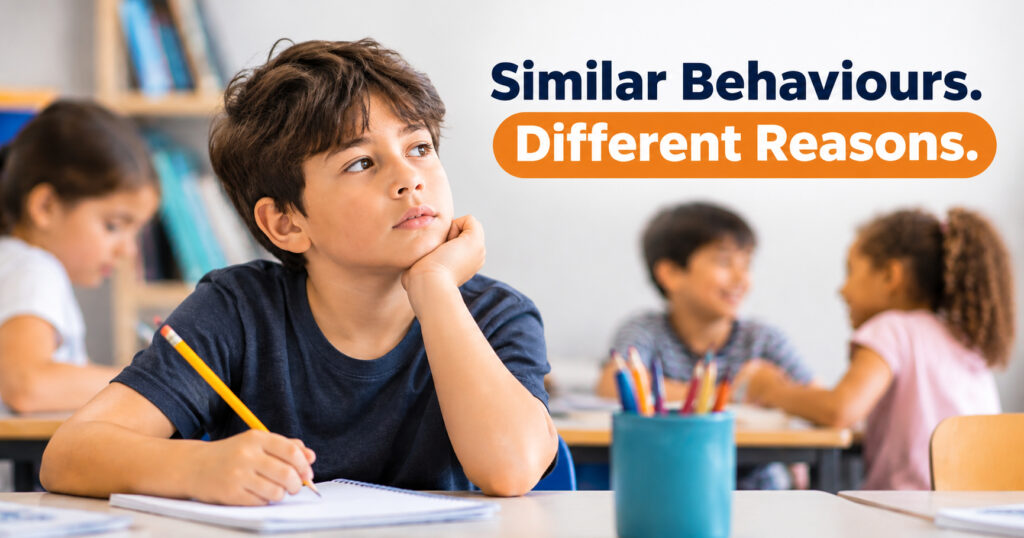
ADHD and autism share a lot of surface features. Both can involve difficulty regulating attention. Both can show up as social struggles, emotional dysregulation, rigidity, sensory sensitivity, and school difficulties. On the outside, a child with ADHD and a child with autism can sometimes look very similar – particularly in a single brief observation.
The difference tends to show up in the why. A child with ADHD may struggle socially because impulsivity gets in the way – jumping in, talking over people, not reading the room in time. An autistic child may struggle because the underlying processing of social information is different at a more fundamental level. When both are present, you can have both mechanisms running simultaneously, and each obscures the other.
The masking problem
Masking adds another layer. Many autistic children (particularly girls) learn to imitate socially expected behaviour well enough that the autism goes unnoticed. They may seem fine at school and fall apart at home.

But if ADHD is also present, the executive functioning load of masking all day while also managing attention and impulse difficulties is considerable. The result is often a child who is exhausted, anxious, and not well understood by any single diagnosis.
If your child has an ADHD diagnosis but you are still seeing rigidity, sensory sensitivities, or social difficulties that do not quite fit the ADHD picture, it is worth raising with a specialist. The same applies in reverse: an autism diagnosis that does not fully explain the attention and impulse profile.
A co-occurring autism and ADHD assessment looks at both profiles together – not as competing explanations but as potentially complementary ones. Getting the full picture matters because the support strategies for each are different, and sometimes opposite. What helps with ADHD attention can feel overwhelming for an autistic nervous system. Knowing what you are working with changes what you do about it.
If the picture feels incomplete, that instinct is worth following up.
Speak to your GP about a referral to a developmental paediatrician or psychologist at Smart Paeds. A thorough assessment is the clearest way forward when one diagnosis does not tell the whole story.
Smart Paeds supports families across Perth with guidance, assessments, and ongoing care, working closely with parents, schools, and healthcare providers.
References
1. Leitner, Y. (2014). The co-occurrence of autism and attention deficit hyperactivity disorder in children. Frontiers in Human Neuroscience, 8, 268.
2. Rommelse, N.N.J., Franke, B., Geurts, H.M., Hartman, C.A., & Buitelaar, J.K. (2010). Shared heritability of attention-deficit/hyperactivity disorder and autism spectrum disorder. European Child and Adolescent Psychiatry, 19(3), 281–295.
3. Hull, L., Petrides, K.V., Allison, C., Smith, P., Baron-Cohen, S., Lai, M.C., & Mandy, W. (2017). “Putting on my best normal”: Social camouflaging in adults with autism spectrum conditions. Journal of Autism and Developmental Disorders, 47(8), 2519–2534.

