
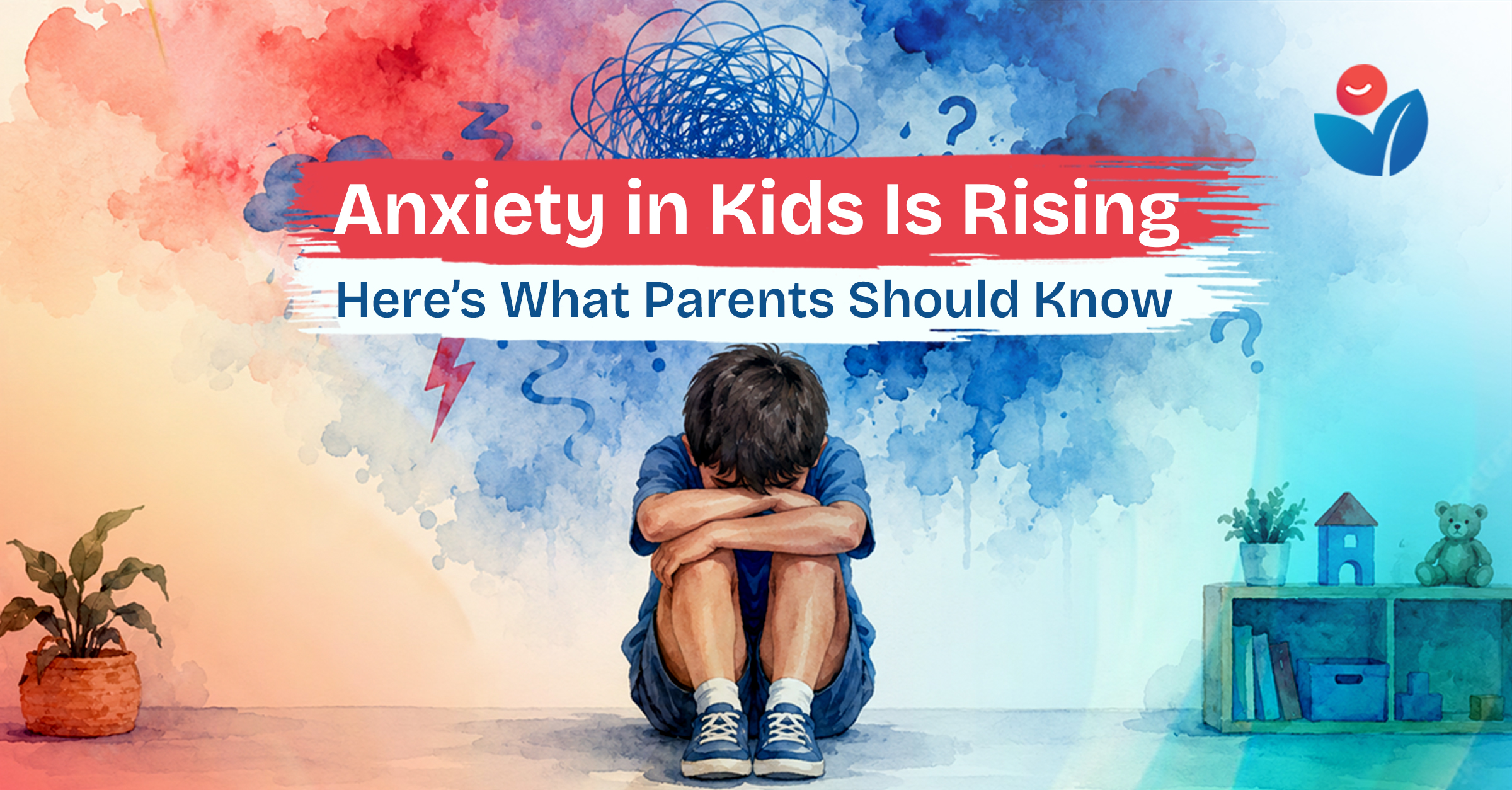
Your daughter has started complaining of a stomachache every Monday morning. Your son refuses to go to birthday parties he would have happily attended last year. Bedtime has become a drawn-out process of reassurance, with the same worries circling again and again.
Anxiety in children is something paediatricians across Australia are seeing more of, and more acutely, than they were a decade ago. Understanding what it looks like and when it warrants support can make a significant difference for families.
What anxiety in children actually looks like
Child anxiety symptoms do not always look like worry. In fact, anxiety in younger children often shows up as physical complaints, avoidance, clinginess, or behaviour that gets labelled as difficult or defiant. A child who refuses to go to school is not necessarily being manipulative. A child who has frequent headaches before social events may not be making it up.
Some common signs of anxiety in children include:
- Frequent stomachaches or headaches with no clear physical cause
- Avoiding situations or places they previously managed fine
- Difficulty separating from parents, particularly at school drop-off
- Excessive reassurance-seeking, asking the same worried questions repeatedly
- Sleep difficulties driven by worry or fear
- Irritability or emotional outbursts that seem disproportionate
It is also worth knowing that anxiety does not always sound like “I’m worried.” Sometimes it speaks through the body instead, as headaches, muscle tension, stomach aches, or restless nights. That last one catches many families by surprise.
“Some anxiety is healthy and normal. It’s how children learn to cope and adapt. It only becomes a concern when it’s out of proportion, sticks around despite reassurance, or starts getting in the way of everyday life. Around 5–10% of children aged 6 to 18 experience an anxiety disorder, so this is something we see often and know how to help with.”
~ Smart Paeds Clinical Team
Normal worry versus something worth exploring
All children experience worry, and some degree of anxiety is a normal part of development. Fear of the dark, nerves before a new school year, apprehension about meeting new people. These are typical childhood experiences.
The point at which it may be worth seeking support is when anxiety is getting in the way of your child’s daily life. If they are consistently avoiding school, withdrawing from activities they used to enjoy, struggling to sleep most nights, or if the worry is causing them significant distress on a regular basis, those are signs that professional guidance could help.
School anxiety in kids is one of the more common presentations paediatricians see, and it can escalate quickly if not addressed. Social anxiety in children is another area that often goes unrecognised because children who are anxious in social settings can appear simply shy or quiet.
“There’s rarely a single cause. Anxiety usually comes from a mix of factors: how a child is wired, family history, their stage of development, and what’s happening in their world. Screens and social media can add to it through disrupted sleep, less time being active, constant social comparison, and the pressure of always being switched on. It’s less about banning screens altogether and more about finding a healthy balance.”
~ Smart Paeds Clinical Team
What is the biggest misconception about anxiety in children?
One of the most common misunderstandings is that reassuring an anxious child will make the anxiety worse, or alternatively, that pushing them through their fears is always the right approach. The reality is more nuanced than either extreme. Childhood anxiety disorders respond best to a careful, gradual approach that validates the child’s experience without reinforcing avoidance.
Another common misconception is that anxious children will simply grow out of it. Some do. But for others, anxiety that is not addressed tends to grow alongside the child, showing up differently at each stage of development.
There is also a common hope that medication will provide the fix. The reality is that medication plays a very small role in childhood anxiety. None of the anti-anxiety medications are approved for children under seven, and what actually works best is behavioural therapy alongside practical changes at home and in the child’s environment.
“Some parents brush it off and hold back from getting help, hoping it’ll sort itself out. Others worry that any anxiety must mean autism or ADHD. Most of the time, it’s neither. Anxiety is very often just anxiety. The most important thing is not to wait. Anxiety tends to respond best to early support, and the sooner it’s in place, the easier it often is to help your child build confidence.”
~ Smart Paeds Clinical Team
What parents should also know about their role
How we relate to our children matters, and certain patterns can play a role in anxiety taking hold. When parenting leans towards being very protective, it can sometimes reinforce a child’s worries rather than ease them, often without anyone realising. This is not about blame. It is a pattern that can be gently adjusted together, and small changes often make a real difference.
The home environment plays a part too. Sometimes, in trying to shield an anxious child from distress, well-meaning and loving parents can unintentionally send the message that the world is more dangerous than it is. Recognising this is the first step to changing it.
How to help an anxious child at home
While professional support is important when anxiety is significant, there are things parents can do day to day that tend to help:
- Acknowledge the worry without amplifying it. Saying “I can see this feels scary” is different from treating every worry as a crisis.
- Maintain routines where possible. Predictability is reassuring for anxious children.
- Avoid complete avoidance of anxiety-provoking situations where safe to do so, as avoidance tends to reinforce the anxiety over time.
- Model calm responses to stress in your own daily life where possible.
Supporting a child’s emotional wellbeing is not about eliminating worry entirely. It is about helping them build the capacity to manage it. Child mental health support, when accessed early, can give children tools that serve them well beyond childhood.
If your child’s anxiety is affecting their daily life, speaking with your GP is a practical first step. They can help assess the situation and, if helpful, provide a referral to a paediatrician or psychologist at Smart Paeds for further support, not only for your child’s wellbeing but for yours, too.
Smart Paeds supports families across Perth with guidance, assessments, and ongoing care, working closely with parents, schools, and healthcare providers.
