
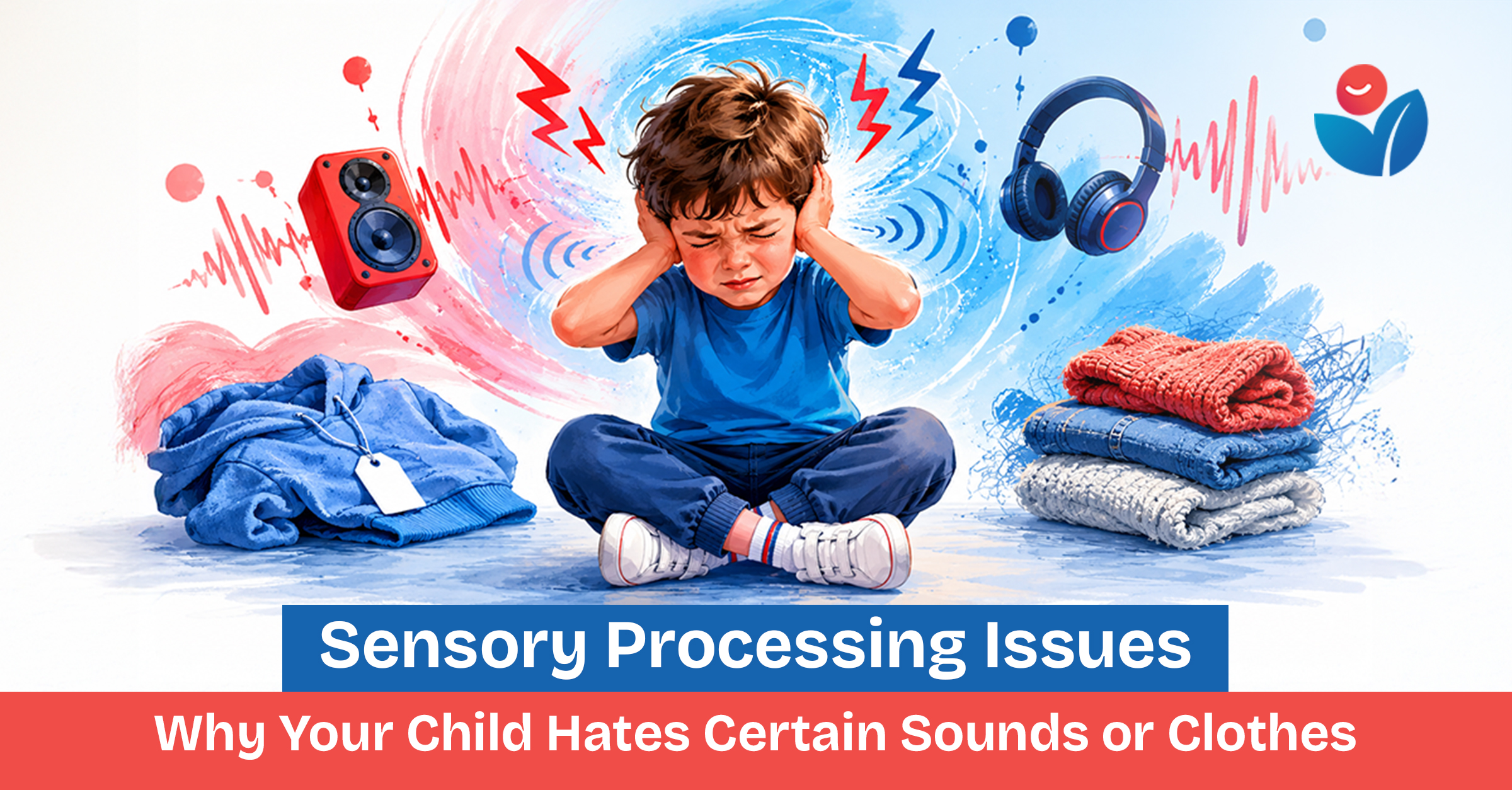
Getting your child dressed in the morning has become a battle. The seams in their socks are unbearable. The tag in their shirt has to come out before they will even consider putting it on. Loud environments send them into meltdown. Meanwhile, their sibling seems completely unfazed by all of it.
If this sounds like your household, your child may be experiencing sensory processing differences, something that is more common than many parents realise and far more than just being fussy or sensitive.
What is sensory processing?
Sensory processing refers to the way the brain receives and responds to information coming in through the senses. For most people, the brain filters and organises this input without much effort. For children with sensory processing differences, that filtering system works differently.
“All of us take in the world through our senses. Most of the time, our brains sort through all that information smoothly without us even noticing. For some children, though, the brain handles those everyday signals differently. Some are over-responsive: a noisy room, a clothing tag, or a particular food texture can feel overwhelming or even unbearable. Others are under-responsive and may go looking for more input, like crashing, spinning, or touching everything. And some children respond in mixed or unpredictable ways from one moment to the next.”
~ Smart Paeds Clinical Team
Here is the part that really helps parents make sense of it: when a child’s senses are constantly on high alert, their whole system is running wound up. That heightened state does not stay contained. It often spills over into trouble concentrating, anxiety, or difficulty managing frustration and anger. So what can look like a behaviour problem on the surface is often a sensory one underneath.
Sensory processing disorder is not a formal diagnostic category on its own in Australia, but sensory differences are well recognised and frequently assessed as part of a broader developmental or autism evaluation. Signs of sensory processing disorder often appear early in childhood and can affect multiple areas of daily life.
What sensory issues in children can look like
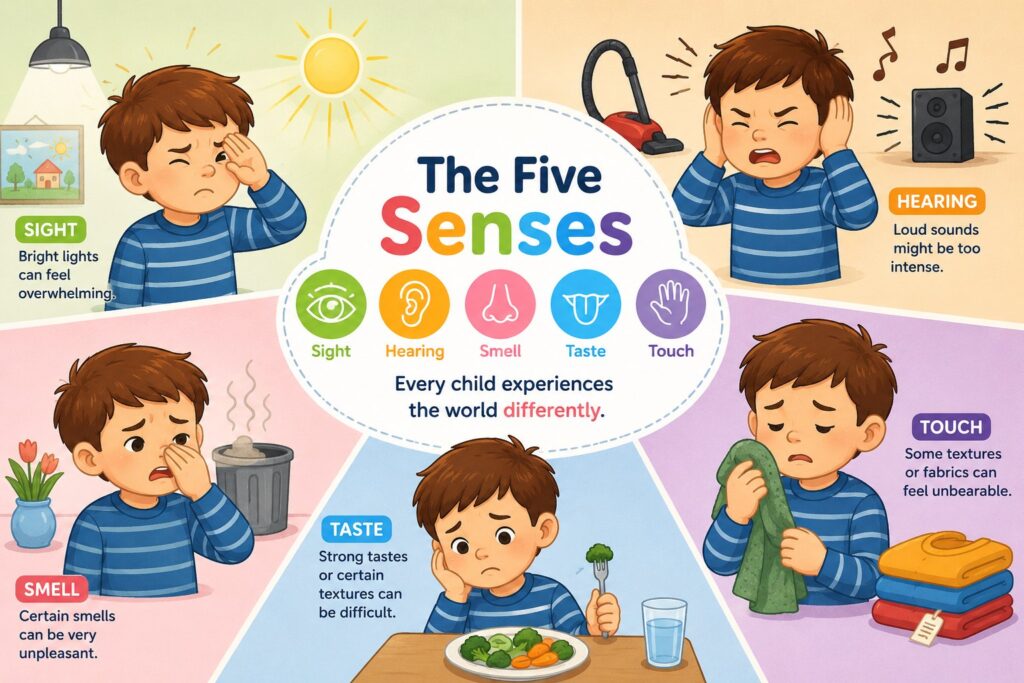
Sensory sensitivities in kids can show up across different senses and in different ways. Some patterns parents often describe may include:
- Tactile sensitivity in children, such as distress around clothing textures, sock seams, food textures, or being touched unexpectedly
- Auditory sensitivity, where a child is sensitive to sounds that others find manageable, such as hand dryers, vacuum cleaners, crowds, or music
- Strong reactions to certain smells or tastes, leading to a very limited diet or distress at mealtimes
- Difficulty with bright lights or busy visual environments
- Seeking out intense physical input, such as crashing into things, needing tight hugs, or always being on the move
- Sensory overload in children, where too much input leads to meltdowns, shutdown, or significant distress
- Looking at things in unusual ways, such as inspecting objects out of the corner of their eye, or becoming fascinated by edges, spinning things, or shiny surfaces
- Unusual responses to pain, seeming to barely notice it, or finding small bumps extremely distressing
These responses are not wilful or manipulative. The child is genuinely experiencing distress, even if the trigger seems minor to everyone else around them.
“Any one of these on its own isn’t necessarily a concern. Lots of children have quirks. The thing to watch for is whether it’s getting in the way of daily life: mealtimes, getting dressed, sleep, play, or being comfortable out and about.”
~ Smart Paeds Clinical Team
Is sensory processing linked to autism?
Sensory differences are a recognised feature of autism, and autism sensory issues are often among the first things parents and teachers notice. However, sensory processing differences can also occur in children without an autism diagnosis. They are also commonly seen alongside ADHD, anxiety, and developmental delays.
If you are noticing significant sensory sensitivities in your child alongside other developmental or social communication differences, an autism assessment may be something worth exploring. A specialist can help determine what is driving the picture and what support would be most useful.
What tends to help?
Any child with significant sensory differences benefits from a formal assessment, usually by an occupational therapist, psychologist, or paediatrician. This takes the guesswork out of it and makes sure the support actually fits your child.
“Occupational therapy tends to be the key support for sensory differences. OTs are wonderful at this. They help children gradually become more comfortable with the sensations they find difficult, and they give you practical, everyday strategies that make a genuine difference at home, at school, and out and about.”
~ Smart Paeds Clinical Team

At home, some practical adjustments can also make a real difference. Removing tags from clothing, offering food gradually rather than insisting, giving advance warning before noisy environments, and creating a calm space for the child to decompress are all things families find helpful.
The key is understanding your child’s specific sensory profile, which is where a professional assessment is most valuable.
If you are looking for a paediatric occupational therapist, we recommend Paediatric OT as a trusted resource for families in Perth.
If sensory difficulties are affecting your child’s daily life, your GP is a good starting point. They can discuss your concerns and, where it makes sense, connect you with an autism specialist or paediatrician at Smart Paeds in Perth through a referral, for an assessment that looks at the full picture.
Smart Paeds supports families across Perth with guidance, assessments, and ongoing care, working closely with parents, schools, and healthcare providers.
