
This blog is intended for general informational purposes only and does not constitute medical advice. Every child is different and individual circumstances vary. Please consult a qualified medical practitioner about your child’s specific needs before making any healthcare decisions.
It is a question that comes up a lot, especially for families who live far from a specialist, have a child who finds clinic visits genuinely difficult, or simply cannot get an in-person appointment within a reasonable timeframe.
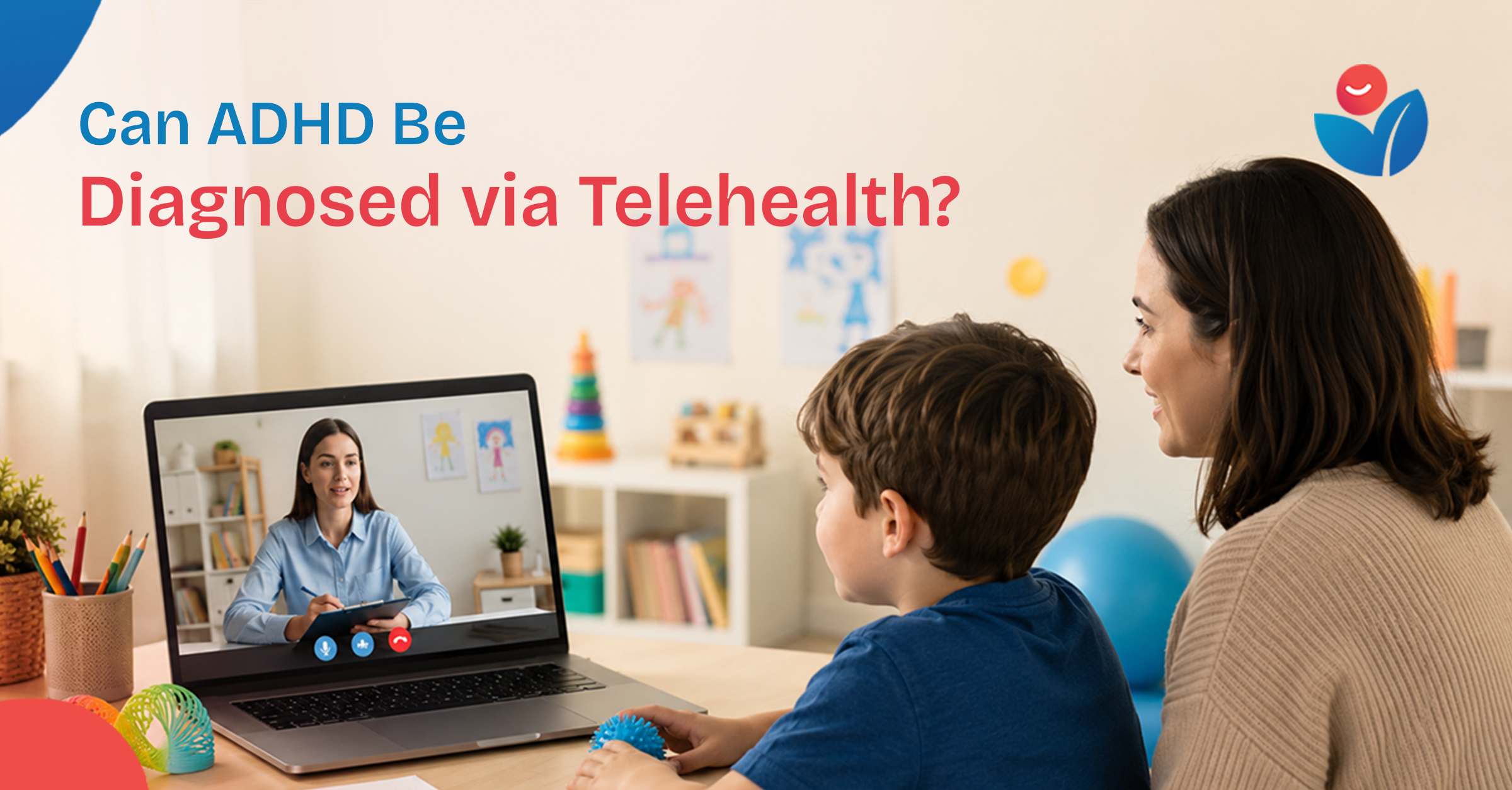
Can a child actually be assessed and diagnosed with ADHD through a screen?
The short answer is: it depends, and the longer answer is worth understanding, because telehealth has genuinely changed what is possible for Australian families seeking support.
What telehealth for ADHD actually involves
Telehealth ADHD diagnosis in Australia has expanded significantly in recent years, and for good reason. Access to paediatric specialists has always been uneven across the country, and virtual consultations have helped close that gap in meaningful ways.
A telehealth ADHD consultation for children typically involves a developmental paediatrician speaking with the child and their parents via video, reviewing detailed background information gathered beforehand, and drawing on input from multiple sources to form a clinical picture. It is not simply a quick chat over a screen. When done properly, it is a structured, thorough process that happens to take place remotely.
What information goes into an ADHD assessment?
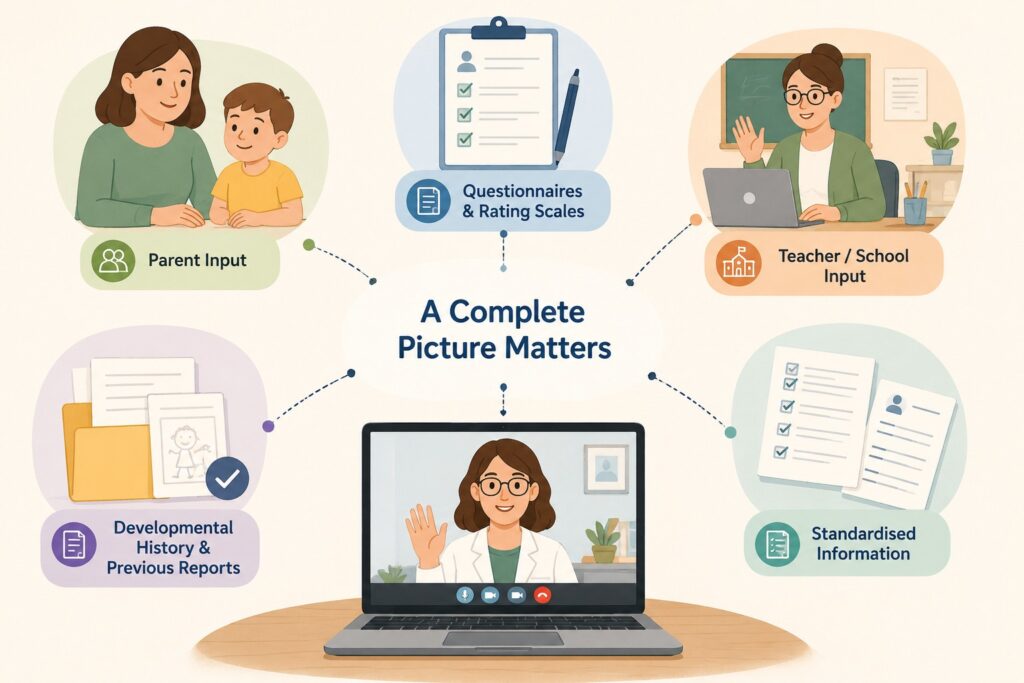
Whether in-person or via telehealth, a thorough child behavioural assessment for ADHD draws on several sources of information. A clinician cannot diagnose ADHD based on what they observe in a single appointment, because children with ADHD do not always present obviously in a clinical setting. In fact, many children are on their best behaviour during an assessment, which is why the broader picture matters so much.
A comprehensive assessment typically includes:
- A detailed developmental history covering pregnancy, birth, early milestones, and family background
- Parent questionnaires that ask about behaviour, attention, and functioning across different settings
- Teacher questionnaires because how a child manages at school is a critical part of the picture
- Standardised rating scales that measure ADHD-related behaviours in a structured way
- A clinical interview with the parent and, depending on age, with the child themselves
- Review of any previous reports from schools, psychologists, or other health professionals
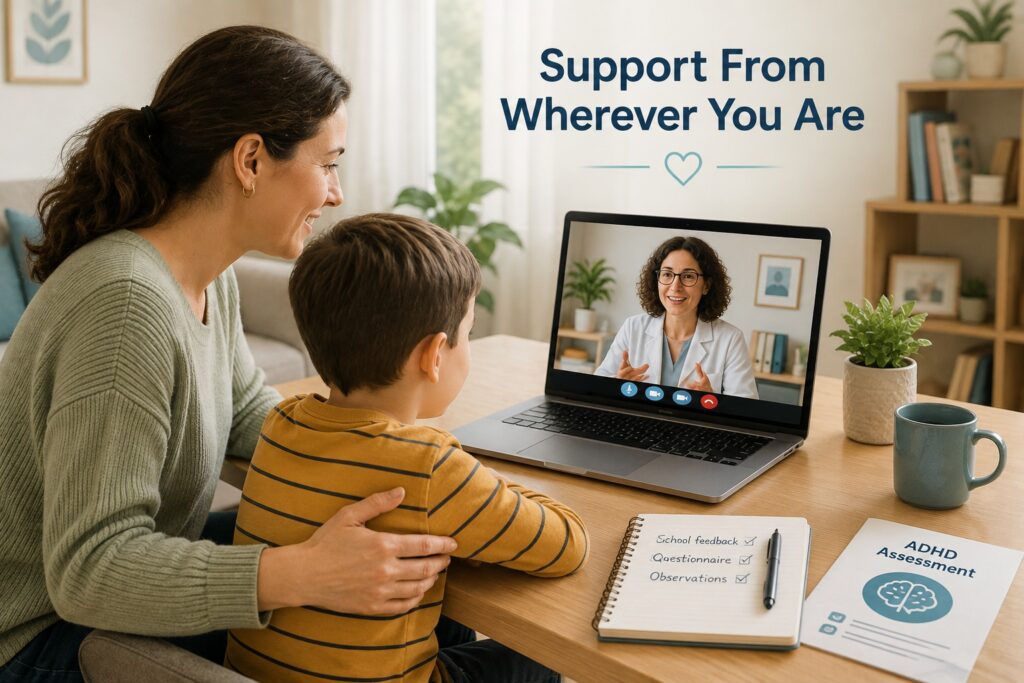
All of this can be gathered and reviewed via a virtual ADHD assessment. The paperwork, questionnaires, and school reports come through before the appointment. The clinical interview happens over video. And the assessment report is produced just as it would be following an in-person consultation.
So what can telehealth do, and what are its limits?
This is an honest question and it deserves an honest answer.
For many children, particularly those being assessed for ADHD, telehealth works well. ADHD does not require physical examination in the same way some other conditions do. The diagnostic process is heavily reliant on history, observation, and standardised information gathering, all of which translate to a remote format without significant loss.
A telehealth ADHD assessment may be appropriate when conducted thoroughly, using standardised tools, with input from multiple sources including school. Whether it is suitable for your child’s specific circumstances is a clinical decision best made with your treating practitioner.
That said, telehealth is not always the right fit for every child or every situation. If a child has complex needs across multiple areas, if there are concerns beyond ADHD such as developmental delays or significant behavioural challenges that need physical observation, or if the child is very young, an in-person assessment may give a clearer picture.
A good clinician will be upfront about this. If telehealth is not appropriate for your child’s situation, they will tell you, and they will help you understand what the next step should be.
What about medication? Can that be managed via telehealth too?
In Australia, ADHD medication for children requires a prescription from a paediatrician or child psychiatrist. Once a diagnosis is established and a treatment plan is in place, follow-up consultations, including medication reviews, can often be conducted via telehealth. This is particularly useful for families managing ongoing care without needing to take time off work for every review appointment.
It is worth noting that the initial prescribing of stimulant medication requires careful assessment and cannot be done off the back of a single online conversation. Your treating doctor will advise on the appropriate pathway for your child.
Is telehealth right for your family?
It might be, particularly if any of the following apply:
- You are on a long waitlist for an in-person appointment and want to explore alternatives
- Your child finds clinic settings anxiety-provoking and may present more naturally at home
- You live in a regional area or have limited access to paediatric specialists nearby
- Your schedule makes getting to multiple in-person appointments genuinely difficult
- You have already gathered school reports and previous assessments and are ready to move forward
At the same time, telehealth may not be the best fit if your child has very complex needs, is under two or three years old, or if previous assessments have raised concerns that warrant a hands-on evaluation.
The best starting point, as always, is a conversation with your GP. They can review your child’s history, discuss whether a telehealth or in-person pathway makes more sense, and provide a referral to a developmental paediatrician who can take it from there.
A note on choosing the right provider
Not all online ADHD assessments are created equal. With the growth of telehealth services in Australia, there are now many providers offering virtual consultations, and the quality varies. When seeking a telehealth ADHD specialist for your child, look for a clinician who gathers information from multiple sources including school, not just a parent interview, takes time to understand the full developmental picture, is transparent about what the assessment does and does not cover, and is willing to recommend an in-person assessment if the situation calls for it.
A thorough assessment takes time. If a provider is offering a diagnosis after a single short consultation with no school input and no standardised rating scales, that is worth questioning.
If you are wondering whether telehealth is the right pathway for your child’s ADHD assessment, your GP is a great first point of contact. With a referral, your child can be seen by a developmental paediatrician at Smart Paeds who can advise on the most appropriate assessment pathway for your child’s specific needs.
Smart Paeds supports families across Perth with guidance, assessments, and ongoing care, working closely with parents, schools, and healthcare providers.
This blog does not replace professional medical advice. Always discuss your child’s individual circumstances with a qualified medical practitioner.
References:
- Australian Government Department of Health. (2021). Telehealth services. health.gov.au
- Royal Australian College of General Practitioners (RACGP). (2020). Telehealth guidelines for Australian healthcare practitioners.
- American Academy of Pediatrics. (2019). Clinical Practice Guideline for the Diagnosis, Evaluation, and Treatment of ADHD in Children and Adolescents. Pediatrics, 144(4).
