
In the early years of school, many parents start noticing things they hadn’t worried about before.
A child who doesn’t seem to listen. Difficulty following instructions. Trouble staying focused. Strong reactions to noise, clothing, or busy environments. Often, these observations don’t come from a single incident – they build slowly, day by day.
The challenge for parents is knowing where normal development ends and when it might be time to ask for professional advice.
Young children are still learning how to learn. Their brains are developing rapidly, and skills like attention, listening, and self-regulation don’t mature at the same pace for every child.
It’s common for children to:
- Miss instructions when distracted or tired
- Need directions repeated or broken down
- Struggle to sit still for extended periods
- Find busy classrooms overwhelming at times
These behaviours, on their own, don’t necessarily indicate a problem. Context matters – including age, environment, fatigue, and emotional demands.

Following Instructions
Difficulty following instructions is one of the most common concerns raised by parents and teachers.
In many cases, this reflects:
- Limited attention span for age
- Difficulty processing multiple steps at once
- Distraction in noisy or stimulating settings
Young children often manage one instruction well but struggle when several are given together. This is developmentally expected and improves with time and support.
What’s more important than occasional difficulty is whether the pattern persists across different settings; home, school, and other environments.
Concentration and Attention
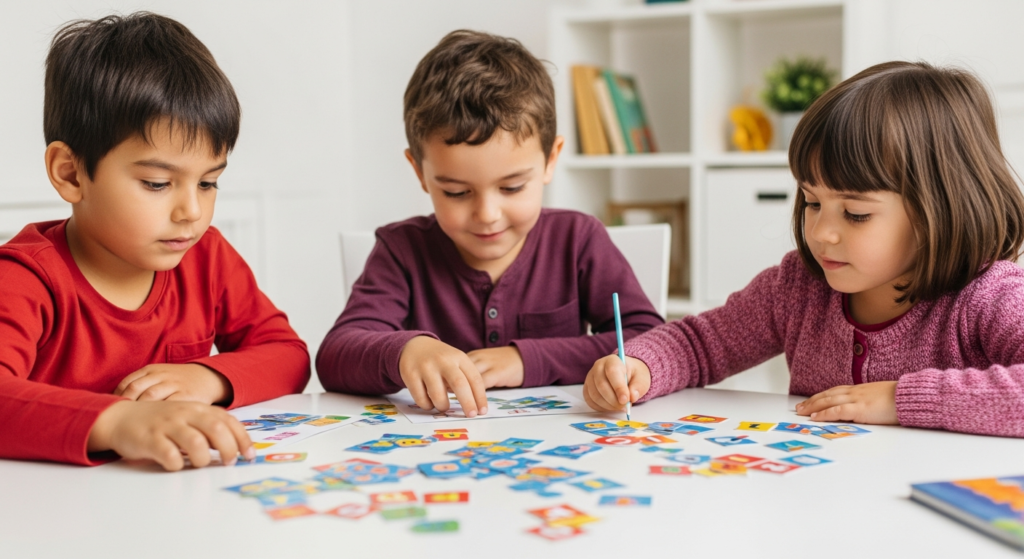
Concentration in early childhood is brief and variable. Many children focus well on activities they enjoy but struggle with tasks that feel effortful or unfamiliar.
Things to observe include:
- Whether your child can stay engaged in preferred activities
- Whether attention improves with structure or adult support
- How fatigue or overstimulation affects focus
Short attention spans alone are not a cause for concern. Attention develops gradually and is shaped by routine, sleep, and emotional regulation.
Sensory Sensitivities
Some children experience the world more intensely than others. Sensory sensitivities can show up as:
- Discomfort with loud sounds or crowded spaces
- Strong reactions to certain fabrics, food textures, or smells
- Avoidance of messy play or physical contact
These sensitivities exist on a spectrum and are not uncommon in young children. Many improve as children mature and learn coping strategies, especially when their environment is supportive and predictable.
It can be helpful to pause and seek advice if challenges:
- Persist over time rather than improving
- Occur across multiple settings
- Significantly interfere with learning, relationships, or daily routines
- Cause distress for your child or your family
This doesn’t mean something is “wrong.” It means further understanding may be helpful.
The first step should always be a discussion with your GP.
Your GP can review your concerns, consider your child’s overall development, and guide next steps.
If appropriate, your GP may provide a referral to one of our specialist paediatricians at Smart Paeds. Developmental and learning challenges are complex and should always be assessed carefully by a qualified clinician.
Children develop along different timelines. Early learning challenges don’t define a child’s abilities or future outcomes. Many skills strengthen significantly with time, routine, and the right support.
And if you or someone you care about needs immediate mental health support, please contact:
- Lifeline – 13 11 14
- Beyond Blue – 1300 22 4636
- Kids Helpline – 1800 55 1800 (ages 5–25)
Sometimes clarity is all that’s needed. Sometimes support makes the difference. Both begin with a conversation.
