
This blog is intended for general informational purposes only and does not constitute medical advice. Every child is different and individual circumstances vary. Please consult a qualified medical practitioner about your child’s specific needs before making any healthcare decisions.
ADHD diagnoses in Australian children have risen steadily over the past decade, and 2026 looks no different. Awareness is genuinely higher than it has ever been. More children are being identified earlier, more schools are having the conversation, and more families are walking out of paediatric clinics with language for something they have been living with for years.
And yet, for many of those families, the diagnosis is where the support system ends rather than begins. A letter confirming ADHD does not fix the morning routine. It does not sit with a child while they cry over homework. It does not help a parent explain to a teacher, again, why their child keeps losing their hat.
That gap between knowing and being genuinely supported is where this month matters most.
What the child is carrying
Before we talk about systems and strategies, it is worth pausing on what it feels like to be the child in the middle of all of this.
Many children with ADHD spend their days working twice as hard as their peers just to keep up and still falling short in ways they cannot explain. They know what they are supposed to do. They want to do it. The gap between intention and action is not something they chose, and most of them are acutely aware that other people do not seem to have the same gap. That daily experience of trying and still not getting there quietly shapes how a child sees themselves (Barkley, 2015).

When the adults around them understand this – not just know the diagnosis but genuinely understand it – everything shifts. A teacher who reads a child standing up as regulation rather than disruption. A parent who meets a meltdown with curiosity before consequence. These moments are small. Their cumulative effect on a child’s sense of self is not.
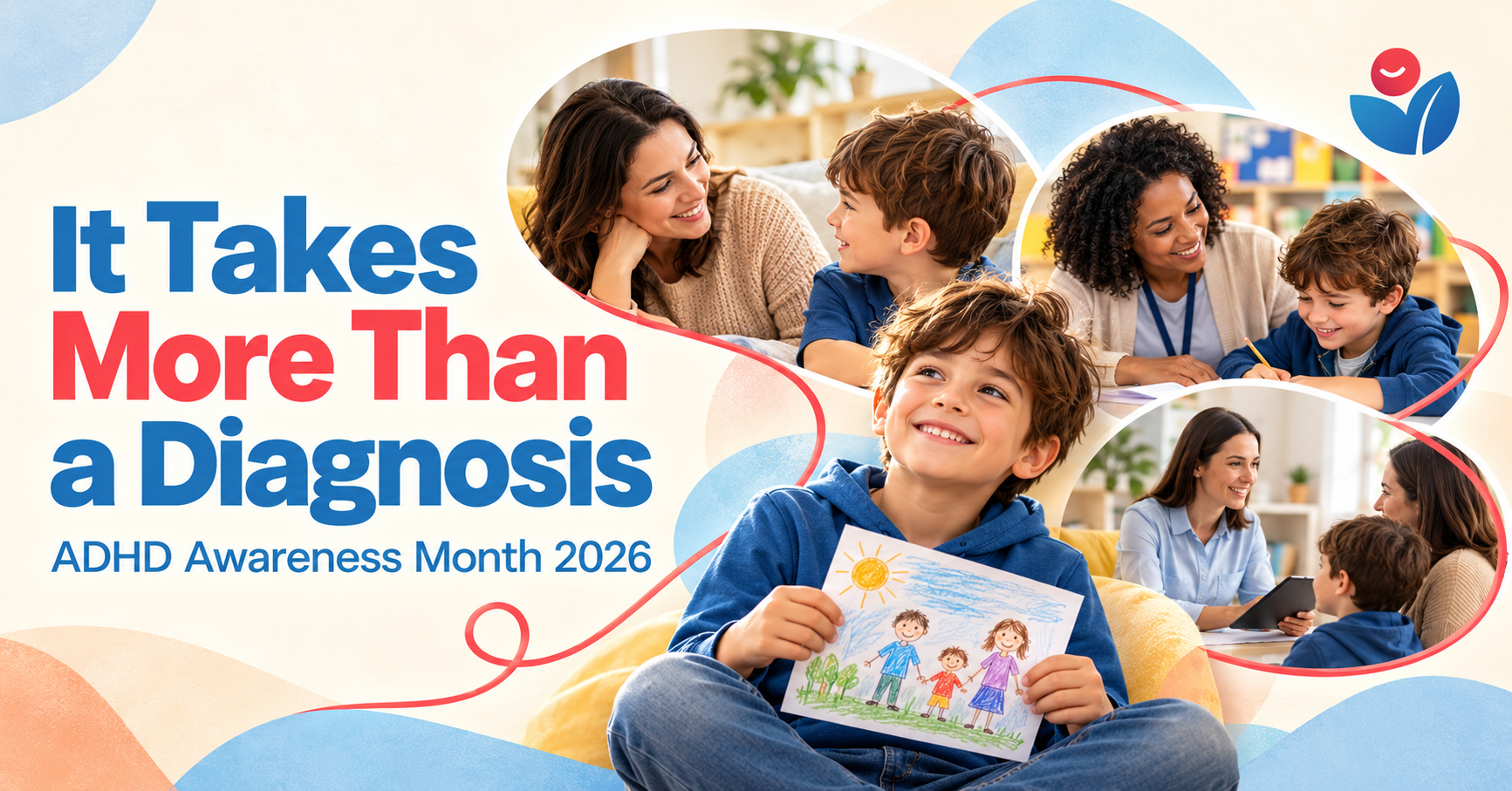
Supporting children with ADHD well is a team effort, and the team needs to be talking to each other. The paediatrician mapping the clinical profile. The occupational therapist working on executive functioning difficulties that make daily tasks harder than they look. The school implementing adjustments that match the child’s actual needs. The psychologist helping a child build emotional regulation skills that their brain is still developing.
Each of those relationships matters on its own. Together, they create something a diagnosis alone cannot: a child who feels understood across the different parts of their life, and support for families living with ADHD that goes beyond a single appointment (Daley & Birchwood, 2010).
For parents, the community matters just as much
Parenting a child with ADHD in 2026 comes with its own particular pressures. Awareness has made ADHD more visible, which is largely good – but it has also created a landscape of conflicting advice, miracle routines, and carefully curated success stories that can make an ordinary hard week feel like failure.
Finding other parents who understand, building a support network that includes people beyond the immediate household, and connecting with professionals who treat you as a partner rather than a problem to solve, these are the things that make this sustainable. Not just for the child. For the whole family.
If your child has recently been assessed for ADHD, or if you are somewhere in the process and are not sure what comes next, start by building the team. Child development and ADHD support works best when it is coordinated, and a developmental paediatrician can map your child’s individual profile and connect you with the right people from there.
This October, if the last few months have felt like you are managing alone, know that you are not supposed to be. The earlier the right support is in place, the more runway your child has to build on it.
Your GP can provide a referral to a developmental paediatrician at Smart Paeds, supporting families across Perth with assessments, guidance, and ongoing care.
Smart Paeds supports families across Perth with guidance, assessments, and ongoing care, working closely with parents, schools, and healthcare providers.
References
1. Barkley, R.A. (2015). Attention-Deficit Hyperactivity Disorder: A Handbook for Diagnosis and Treatment (4th ed.). Guilford Press.
2. Daley, D., & Birchwood, J. (2010). ADHD and academic performance: Why does ADHD impact on academic performance and what can be done to support ADHD children in the classroom? Child: Care, Health and Development, 36(4), 455–464.
3. Australian Institute of Health and Welfare. (2023). ADHD in Australia. Retrieved from aihw.gov.au
