
As a parent, noticing your child struggling with attention, behaviour, or social interactions can feel confusing and overwhelming. Two terms that often come up are ADHD (Attention-Deficit/Hyperactivity Disorder) and ASD (Autism Spectrum Disorder). While these are recognised conditions, only a qualified clinician can assess and diagnose them.
That said, understanding the broad differences and the areas where they may overlap, can help parents know what to look out for and when it might be helpful to seek professional guidance.
What is ADHD?
ADHD is a neurodevelopmental condition that affects a child’s ability to regulate attention, behaviour, and energy levels. It is typically characterised by:
- Inattention – difficulty focusing, becoming easily distracted, forgetfulness
- Hyperactivity – constant movement, fidgeting, difficulty sitting still
- Impulsivity – acting without thinking, interrupting others, difficulty waiting
Some children may experience challenges with schoolwork, following instructions, or staying organised.
What is ASD?
Autism Spectrum Disorder (ASD) is another neurodevelopmental condition, primarily associated with communication, social interaction, and patterns of behaviour. Children on the spectrum may show:
- Differences in social interaction – difficulty reading social cues, forming friendships, or engaging in back-and-forth conversation
- Restricted interests – deep focus on certain topics or repetitive behaviours
- Sensory sensitivities – unusual reactions to sounds, lights, textures, or other sensory input
Because it is a spectrum, children with autism can present with a wide range of abilities and challenges.
Some behaviours can look similar, which is why it can sometimes be difficult for parents and teachers to distinguish between the two.
These may include:
- Difficulty sustaining attention
- Challenges in social interaction
- Emotional regulation difficulties (e.g., meltdowns, frustration, anxiety)
- Struggles with adapting to changes in routine
It’s also possible for a child to experience both ADHD and ASD.
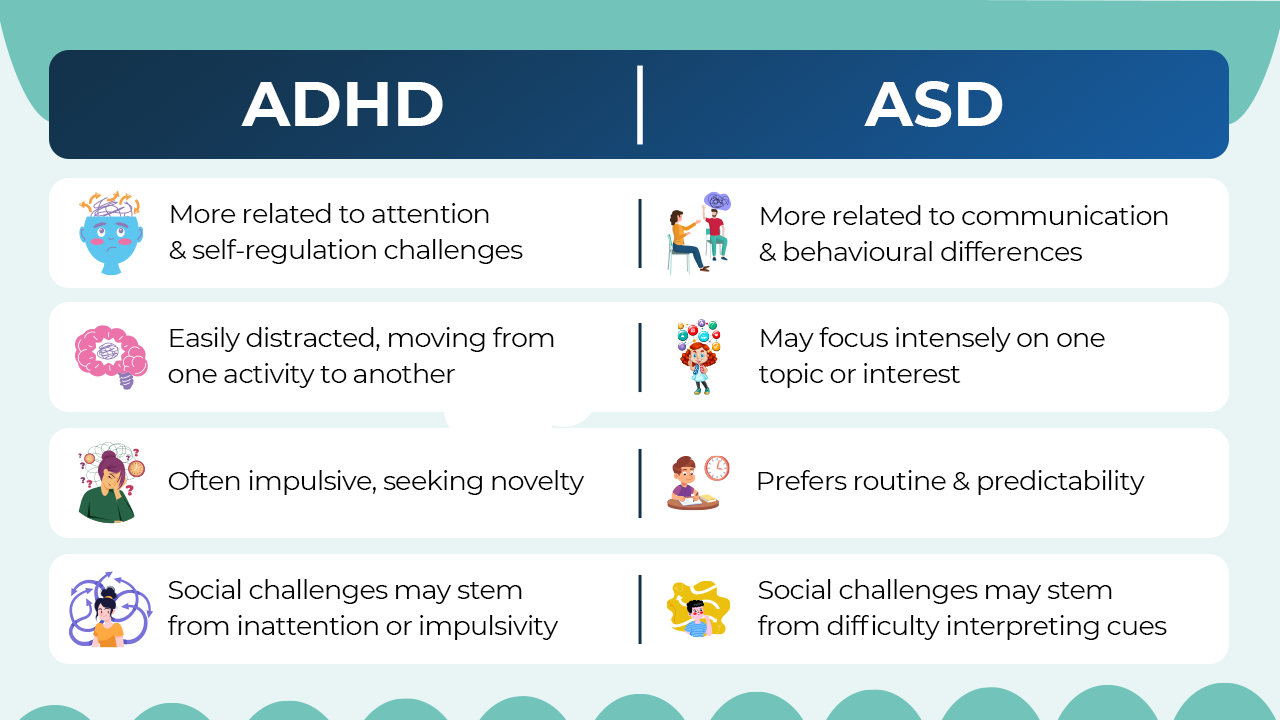
Key Differences in Patterns
Although overlaps exist, there are important distinctions in the way these conditions may present:
When to Seek Support
If you notice ongoing challenges in your child’s learning, behaviour, or social interactions, it may be helpful to seek professional advice. A paediatrician or developmental specialist can provide:
- A thorough developmental assessment
- Guidance on whether the concerns might be linked to ADHD, ASD, or another factor
- Recommendations for strategies, therapy, or additional support
Whether your child has ADHD, ASD, or simply learns differently, supportive strategies can make a big difference. These include:
- Keeping routines predictable and structured
- Using positive reinforcement to encourage desired behaviours
- Breaking instructions into smaller, manageable steps
- Working closely with teachers and therapists to ensure consistency
Every child’s journey is unique, and differences in attention, learning, and social interaction don’t always point to a diagnosis. But if concerns persist, seeking early support can open the door to helpful strategies and reassurance.
At Smart Paeds, our team works with families to understand concerns and provide clear guidance. If you’renunsure about your child’s development, we’re here to help with professional assessment and tailored support.
Book an appointment with Smart Paeds today and take the first step towards clarity and confidence.
